Some Scientists Want to Open Mars's Mail on the Moon First
A peer-reviewed proposal argues that as we start hauling samples back from Mars and beyond, the safest place to open the containers is a robotic lab on the Moon, not one on Earth. The 'alien plague' headlines miss what the argument is actually about.
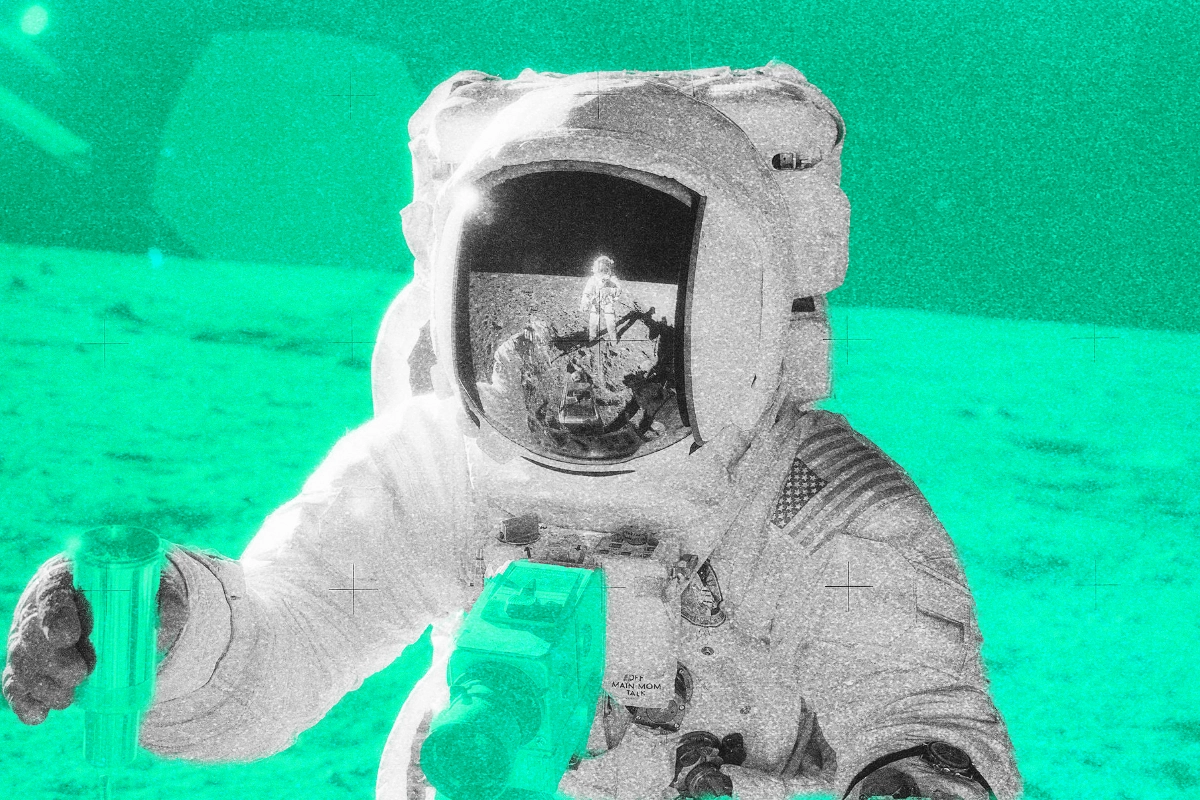
There is a kind of science headline built to trigger the lizard brain, and 'scientists want to quarantine alien life on the Moon' is close to the platonic ideal of it[1]. The actual proposal underneath is quieter, and more interesting than the monster-movie framing suggests. In a peer-reviewed paper in the journal Ambio, two researchers argue that as we start hauling samples back from Mars, asteroids, and the icy moons, the safest place to open the containers first is not a lab on Earth but a robotic facility on the Moon[2]. The claim is not that Martian germs are coming for us, but that we are far less sure than we pretend about what could survive the trip.
What they are actually proposing
The idea is a dedicated biocontainment facility on the lunar surface, handled entirely by machines, where returned material would be examined and stored before any of it comes near Earth's biosphere[2]. Samples from Mars and other bodies would be routed there first, screened by robotic systems, and only cleared for the trip home once they were judged safe[3]. The Moon, in this telling, becomes a kind of airlock for the solar system: close enough to reach, isolated enough to contain a mistake, and, as far as we can tell, carrying no biosphere of its own to contaminate in either direction[4].
This is invasion biology, not a monster movie
The framing that makes the paper worth reading is who wrote it. One of the authors, Anthony Ricciardi, is an invasion biologist, someone who studies what happens when a species turns up somewhere its new neighbors never evolved to handle[2]. Read through that lens, the argument stops being about little green men and starts sounding like every zebra mussel and cane toad case study you have ever heard, scaled up to a planet. The point is not that life on Mars is likely. It is that biologists keep finding extremophiles on Earth thriving in radioactive, frozen, or acidic places that should be lethal, which quietly undercuts the comfortable assumption that anything from Mars simply could not make it here[1]. When the probability is low but genuinely unknown, and the downside is irreversible, ecologists tend to argue for caution. That is what this is.
We have done planetary quarantine before, badly
None of this is unprecedented, which is the part the coverage tends to skip. When Apollo brought the first Moon rocks and astronauts home, NASA ran them through a Lunar Receiving Laboratory built for exactly this fear, that something in the samples might be dangerous[5]. By most later accounts the containment was closer to ritual than reality. NASA spent millions on sealed rooms and biological isolation suits, and then cracked the command module open in the middle of the Pacific, hatch to the open sky, with the ocean breeze rolling across the astronauts and every surface they had touched, hours before any of it reached a clean room. It worked out because the Moon turned out to be sterile, not because the procedure was sound. That history cuts both ways. It shows we have taken the risk seriously enough to plan for it, but it reveals how fast a containment plan collapses into theater the moment the logistics get inconvenient.
Is it worth it?
The obvious objection is cost. Building and operating anything on the Moon is one of the most expensive things our species knows how to do, and NASA's near-term lunar plans are already stretched across landers, habitats, and surface infrastructure[6]. A robotic biocontainment lab on top of that is not a small ask, and it is fair to wonder whether the money buys down a risk we cannot even put a number on. The counterargument is the one insurance runs on. A risk stays acceptable right up until the exact moment it is not, and a self-replicating biological mistake does not sit down to recalculate the premium. It just spreads.
The people who plan these missions are not blind to the problem. Mars Sample Return already takes containment seriously in its own way, with a 'break the chain' philosophy meant to keep unsterilized Martian material from ever touching the outside of the spacecraft that carries it home[6]. Whether the answer is a maximum-containment lab on Earth or a robotic outpost on the Moon is a real and unsettled debate, not a fringe one[7]. The most useful thing this proposal does is force the question while it is still cheap to change the plan. A lunar facility is probably a long shot on cost alone. But the instinct behind it, to decide how careful to be before the samples are in the air rather than after, is the one that matters, because this is not a decision anyone gets to make twice[8]. Almost every mistake in the history of exploration was, in the end, survivable and correctable. A living one, turned loose in our own atmosphere, would be the first we could not take back.
Sources
- Scientists want to quarantine alien life on the Moon before it reaches EarthScienceDaily
- Protecting Earth from extraterrestrial contamination: the case for a lunar biocontainment facilityAmbio (Springer)
- Scientists call for a secure lunar quarantine facility for extraterrestrial samplesSpace.com
- Protecting Earth From Extraterrestrial Contamination: The Case For A Lunar Biocontainment FacilityAstrobiology.com
- Lunar Receiving LaboratoryScience
- The Safety of Mars Sample ReturnNASA
- Researchers propose lunar quarantine to protect Earth ecosystemsSpaceQ
- Biologists Want NASA to Build a Quarantine Lab for Alien Germs on the MoonGizmodo