The Cloud Got Expensive Enough That People Are Running Their Own
Subscription fatigue plus privacy fatigue has quietly rebuilt the home server. The 2026 homelab stack is genuinely good now. The catch is that you are the IT department.
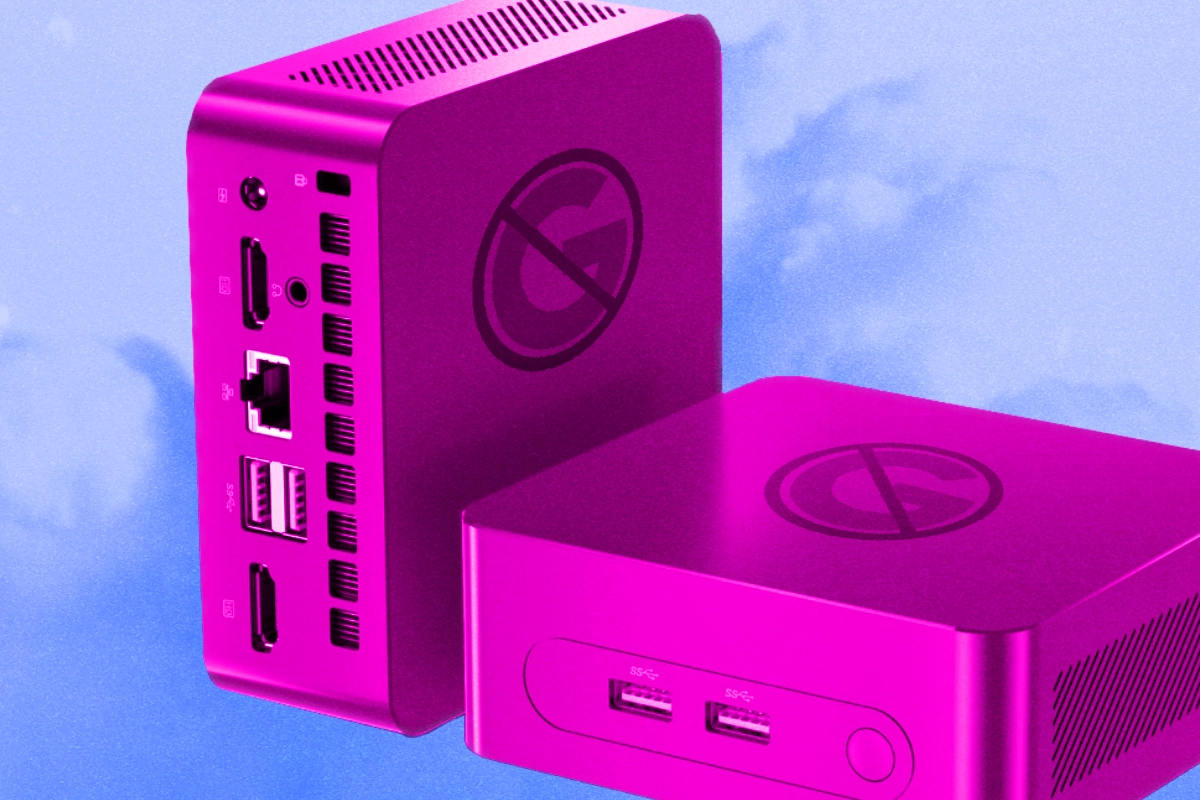
Something has changed in the way people talk about running their own servers, and you can hear it in the forums. The question used to be "what should I run?" asked by hobbyists, answered by hobbyists, filed under hobby. This year's community surveys, GitHub stars, and deployment statistics describe a different conversation: complete stacks that replace a household's cloud subscriptions, discussed in the tone of people comparing utility bills[2].
The economics explain the tone. One XDA writer added up what he canceled, cloud storage, photo backup, password syncing, document drives, and landed at almost $1,100 a year, replaced by a single power-efficient mini PC humming in a corner[1]. Do the arithmetic before repeating that number, though, because storage alone does not get you there: a 2TB Google One plan runs $100 a year and a password manager costs ten. The bill only climbs into four figures once the streaming subscriptions go on the pile, which is where most of these savings actually live, and we will get to what that implies. Subscription fatigue was a grumble in 2023. In 2026 it is a line item people are doing something about.
The spreadsheet is also the shallowest reason to do this, and the communities driving the shift say so themselves. The traffic is no longer confined to r/selfhosted and r/homelab; it spills through r/degoogle, r/privacy, and a widening ring of forums whose founding premise is not saving money but getting your life out of a corporation's hands. The deeper draws do not fit in a budget column: photos that no model trains on, documents that no classifier reads for ad targeting, and services that cannot raise their price, paywall a feature, or rewrite their terms because a quarterly earnings call went badly. Every cloud subscription is a lease on your own data, and the landlord renegotiates it annually, always in one direction. The people building home servers in 2026 are not just canceling bills. They are getting off the lease.
The 2026 stack
What are people actually running? The community answer has converged with remarkable consensus, and the 2026 shortlist fits on one card[2][3].
- Photos
- Immich
- Media
- Jellyfin
- Monitoring
- Uptime Kuma, Netdata, or Beszel
- Local LLM
- LM Studio or Ollama, with Open WebUI for chat
Ten years ago this list was a part-time job to assemble. Today most of it ships as one-command containers with sensible defaults, and the details are the draw: copyparty turns nearly any machine into a file server from a single Python file, Immich does its machine-learning tagging locally, so the family album trains nobody's model, and the LLM row, whether LM Studio or Ollama does the serving, never sends a token off the box. One deliberate omission from the remote-access row: Tailscale is the name everyone knows, but its coordination server is somebody else's cloud, which is a strange dependency for a stack whose whole point is not depending on somebody else's cloud. Headscale, the self-hosted implementation of the same protocol, is the version consistent with the mission.
The media server story is the cleanest example of how this shift happens, so let it stand on its own. Plex spent years as the default answer, then spent its goodwill on increasingly aggressive monetization: paywalled features, remote-streaming nudges, the usual enshittification arc. Jellyfin, the fully open-source fork, absorbed the refugees, and its 2025 plugin explosion closed the remaining feature gaps. The verdict in this year's stack rundowns is blunt: the takeover is complete[2]. And since we are being honest about the economics, a Jellyfin box that replaces four streaming services gets its library from somewhere, and the somewhere is usually the *arr stack quietly fetching what the household used to stream, filed on the forums under "Linux ISOs." I am not writing that guide. I am also not going to pretend the shelves stock themselves. No committee decided this. Users just left, the way water finds the crack.
Be honest about the invoice
Now the part the enthusiasm glosses over, and I say this as someone who runs this stack and has written about where home automation goes wrong[5]. Self-hosting does not remove costs; it converts them. The cloud bill becomes hardware, electricity, and, above all, time. You are the backup strategy. You are the security patch at 11 pm. You are the one explaining to the household why the photos are "temporarily unavailable" during a kernel update. The community's own hard-won wisdom is that a small stack you maintain beats an impressive one that rots[2]. The subscription you cancel is money. The subscription you become is labor.
Put numbers on two of those converted costs, because the cloud bundled them invisibly. The first is capital. The mini PC is the cheap part, $150 or so for a used office box; the storage is not, and moving a decade of photos plus a real media library onto big NAS drives, mirrored like they should be, is another $400 or more before you have saved a cent. The second is redundancy. One machine humming in a corner is not a backup, it is a single point of failure with the family photo album on it. The old 3-2-1 rule still applies, three copies, two kinds of media, one offsite, and the offsite copy means a small recurring bill to something like Backblaze B2 or a second box at a relative's house. Google Drive was never just storage. It was somebody else's fire, flood, and dead-drive insurance, and if you leave, that job leaves with you.
So who is this actually for? If a Saturday spent reading release notes sounds like recreation, you already know, and the tools have never been better[4]. If it sounds like a second job, the honest advice is to pick one thing, photos or media, run it for a while, and see whether the trade fits before canceling anything. The renaissance is real. It just turns out the renaissance has a chores list, and your name is on it.
Sources
- I replaced over $1,000 in cloud subscriptions with one small home serverXDA
- The 2026 Homelab Stack: What Self-Hosters Are Actually Running This Yearelest.io Blog
- 10 Self-Hosted Apps to Try in 2026NetBird
- Best Self-Hosted Apps (2026)Open Source Alternatives
- Home Automation Finally Works. Now the Hard Part Is Knowing When to Stop.casually.onl
- Nextcloud server (source repository)GitHub
- copyparty (source repository)GitHub
- Immich (source repository)GitHub
- Jellyfin (source repository)GitHub
- Uptime Kuma (source repository)GitHub
- Netdata (source repository)GitHub
- Beszel (source repository)GitHub
- WireGuard (official repositories)GitHub
- Headscale (source repository)GitHub
- LM Studio (official site)lmstudio.ai
- Ollama (source repository)GitHub
- Open WebUI (source repository)GitHub